Overview
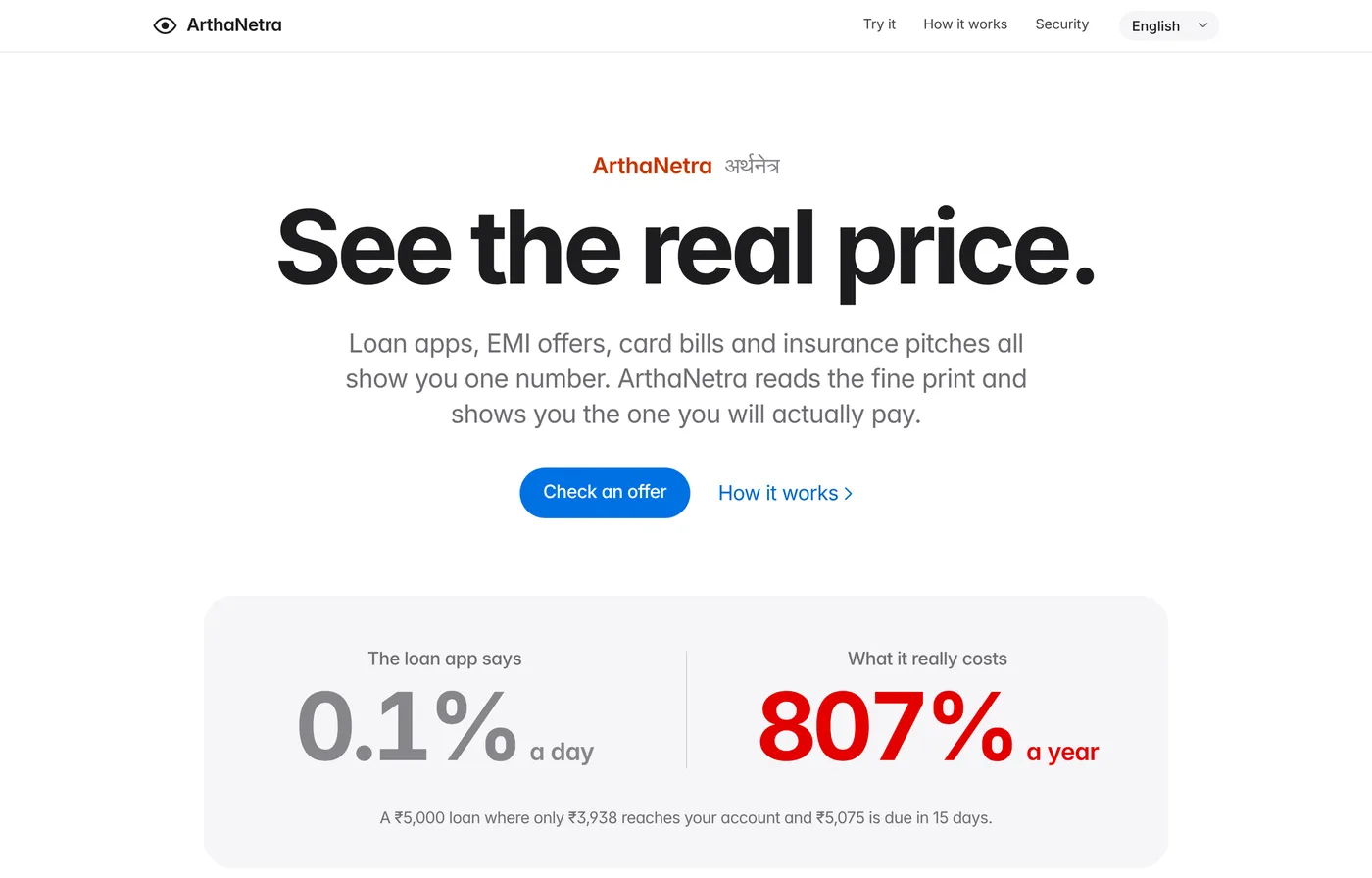
“Artha” means money and “Netra” means eye: ArthaNetra is an eye on money. It reads a loan offer, an EMI deal, a Key Facts Statement, a credit card bill or an insurance agent’s WhatsApp pitch, and tells you what it will actually cost. It checks every number against the document, works out the true yearly cost with a calculation engine, flags anything that goes against RBI or IRDAI rules, and explains the result in 12 Indian languages.
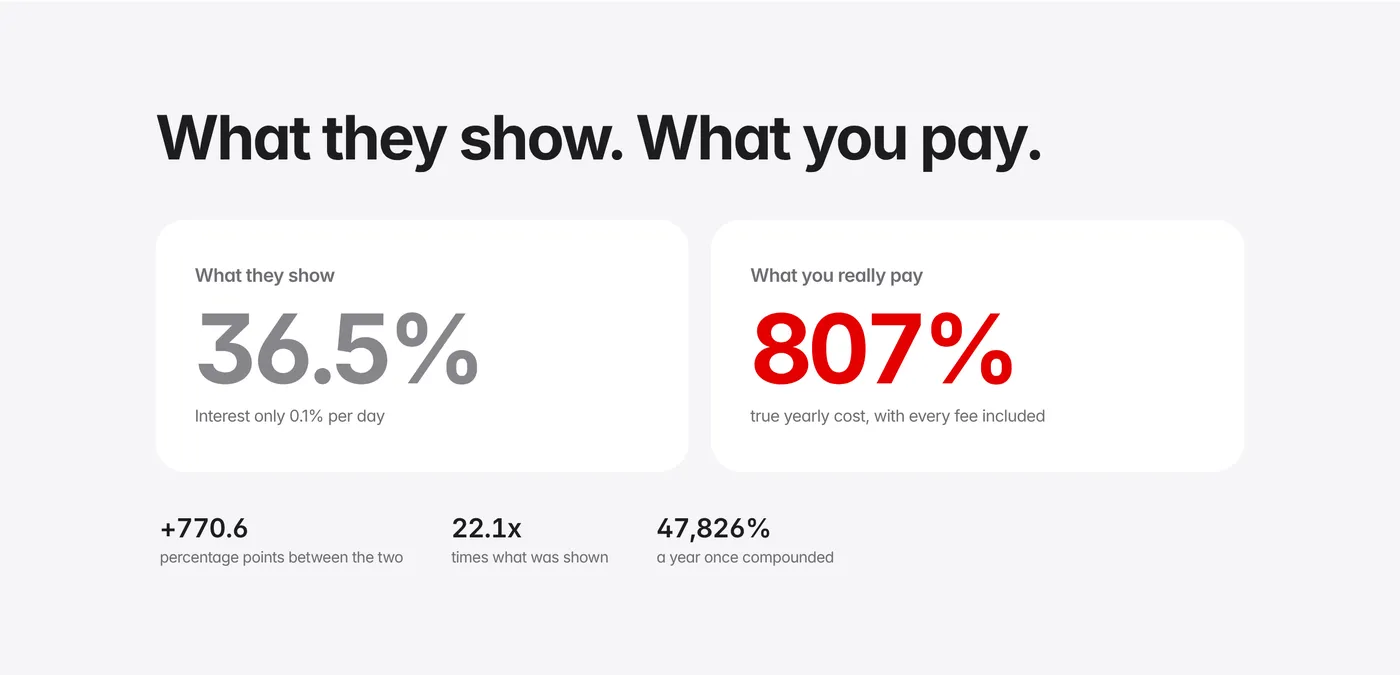
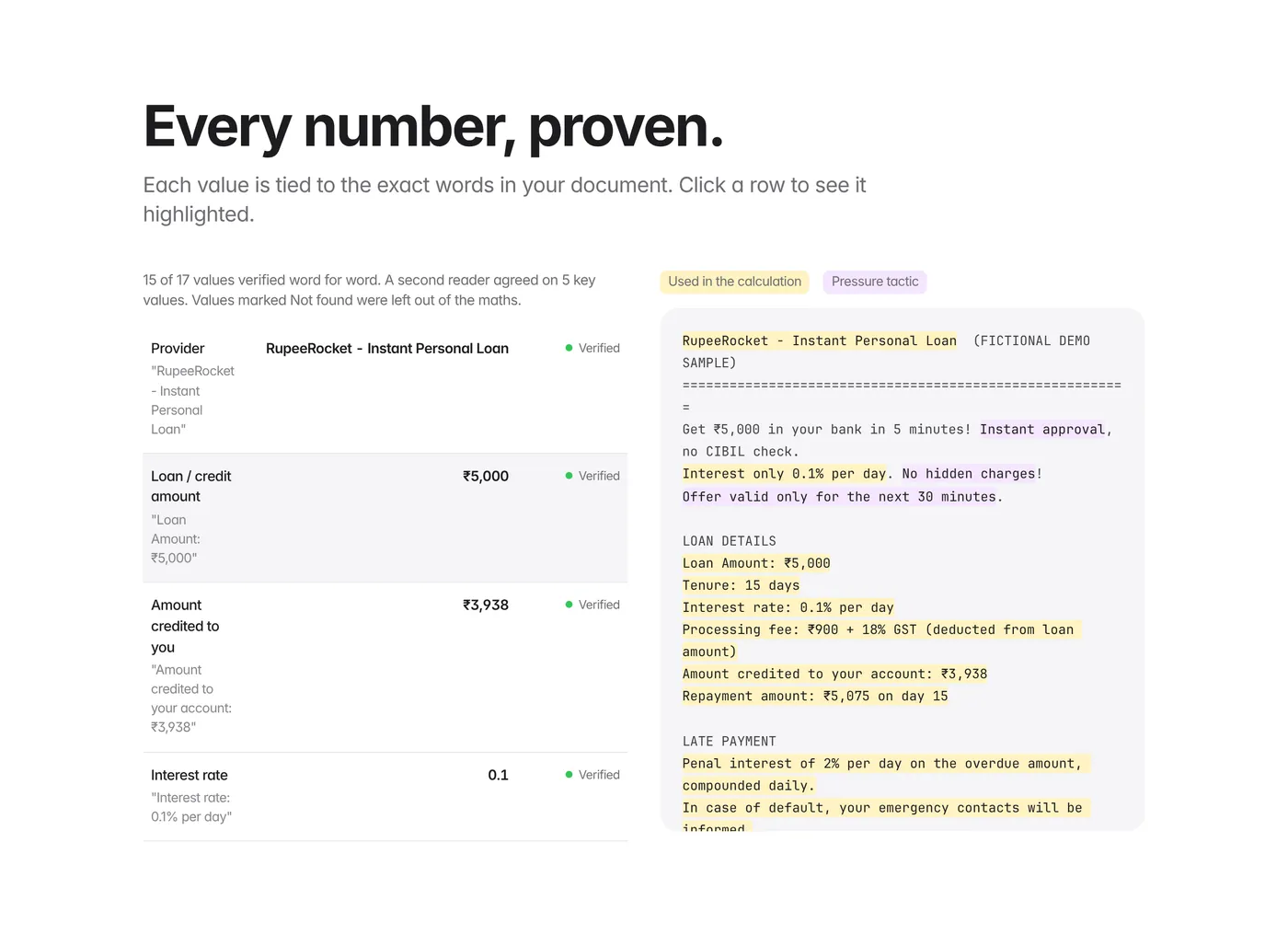
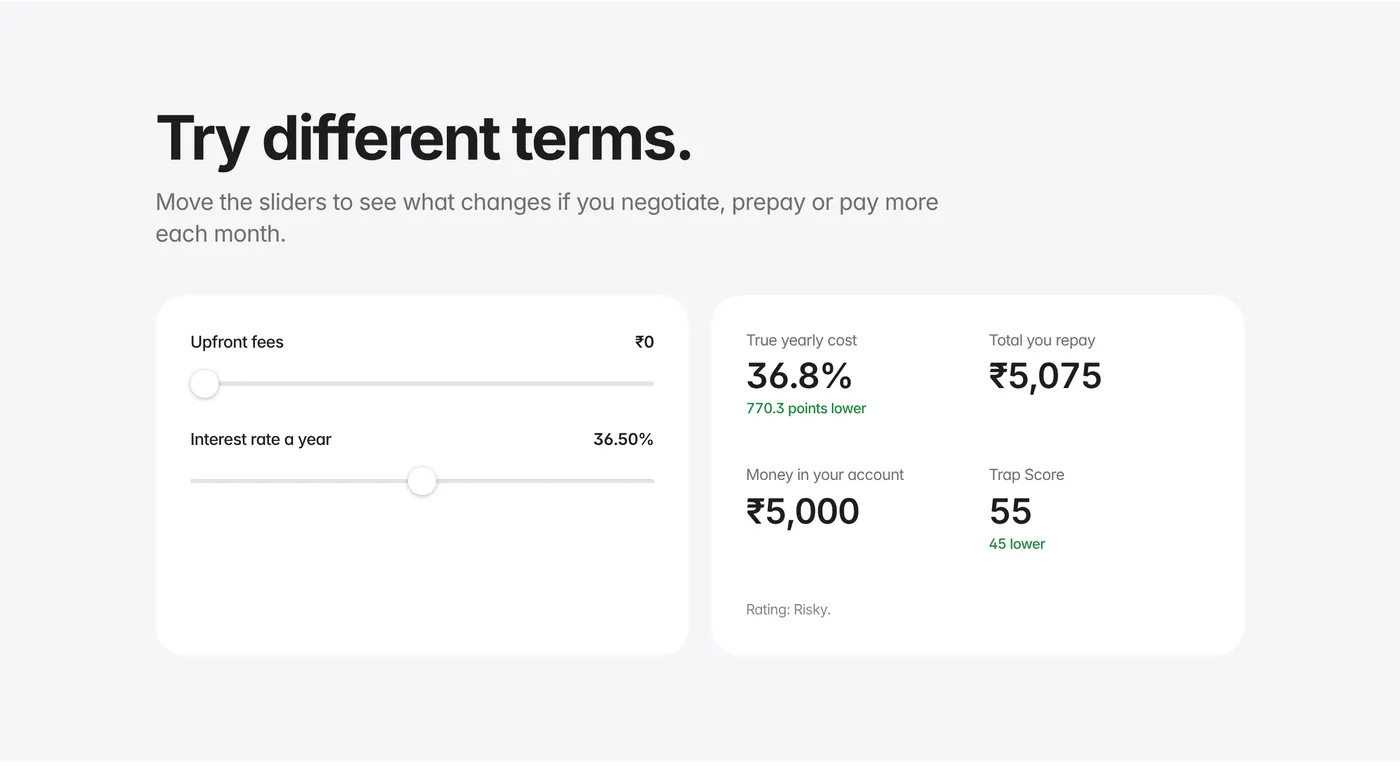
A loan app that says “only 0.1% per day” really costs 807% a year. A “No-Cost EMI” can cost 36.7% a year once the lost discount, fee and GST are counted. ArthaNetra shows the number that matters before you tap Accept.
Problem and aim
Problem
Most people never see the real price of the credit they take. The number on the screen is real; it is just not the number that matters. In 2021 an RBI working group found that about 600 of roughly 1,100 lending apps it examined were operating illegally.
Aim
Give every first-time borrower, student, gig worker and family a free, trustworthy way to check any offer before signing, in their own language.
How it works
01 / 06
Read safely
Text, a PDF or a screenshot comes in. Its real file type is checked, and phone, PAN, Aadhaar, account, card and UPI details are masked before any AI sees it.
02 / 06
Two readers
An AI reader extracts each term and must quote the exact words it came from. A rule-based reader goes through the same document independently.
03 / 06
Prove every number
Each quote is checked against the document, and each number against its quote. Anything that cannot be proven is kept out of the maths.
04 / 06
Calculate the real cost
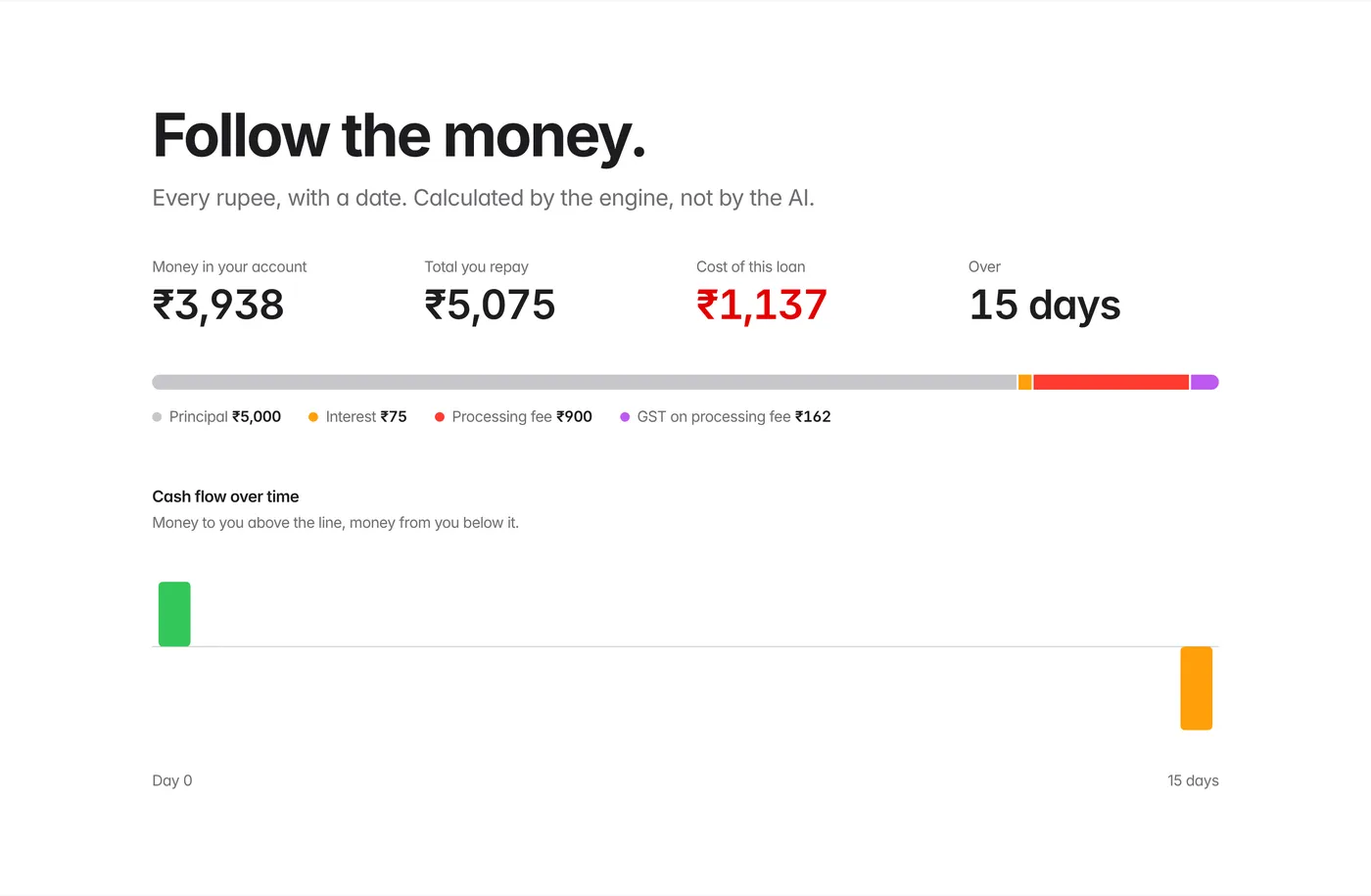
Loans, EMI offers, cards and insurance all become a list of dated payments. The true yearly rate is solved from that list.
05 / 06
Check the rules
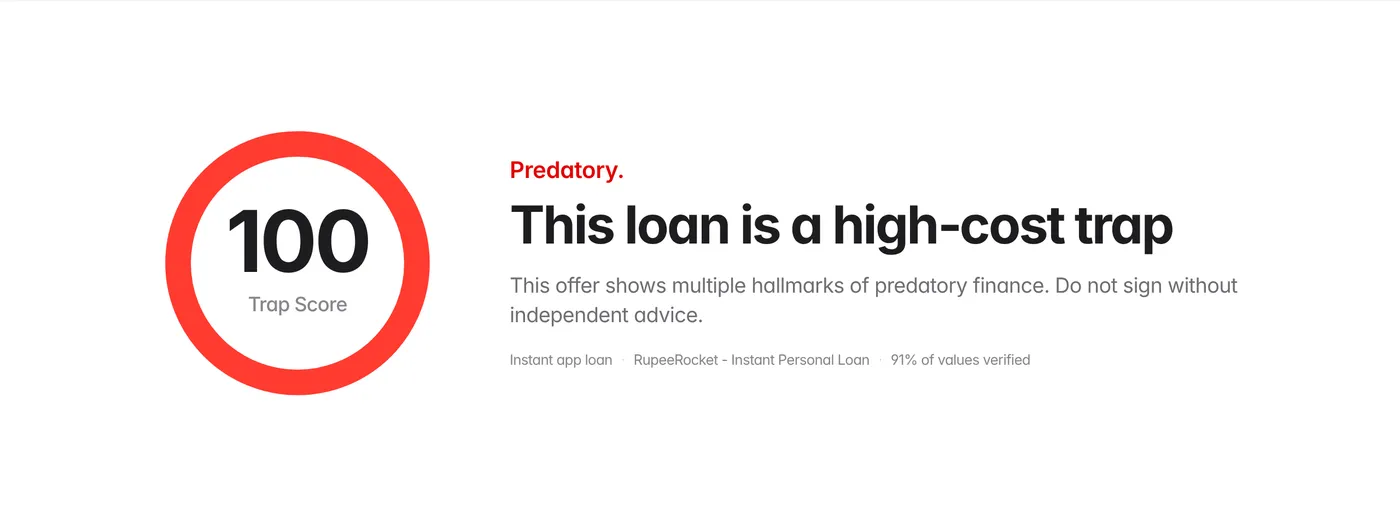
21 checks based on RBI and IRDAI circulars, plus pressure-tactic detection, feed a Trap Score from 0 to 100.
06 / 06
Explain
A plain-language explanation in 12 languages, questions to ask before signing and a reply to send the lender. Every number in the text is checked against the calculation.
Architecture
ABrowser frontend/
- Web appPaste text, upload a PDF or screenshot, or pick an example.
- 12 languagesEvery heading and result switches instantly.
- Simulator, AskChange terms; ask by typing or voice.
BFastAPI back end
- Security + ingestRate limits, file checks, masking of personal details.
- Two readersAI reader with quotes + rule-based reader, cross-checked.
- EngineDated payments → true yearly rate; 21 RBI / IRDAI rules; Trap Score.
- ExplainPlain language; every number checked.
CExternal, optional
- Groq / GeminiReading, explanations, screenshots.
- Whisper (via Groq)Voice questions.
- No databaseNothing is stored.
Request flow
- A document arrives; its real file type is checked and personal details are masked.
- An AI reader and a rule-based reader extract the terms; every value must quote the document.
- Verified terms become a list of dated payments; the true yearly rate is solved from it.
- Rule checks and pressure-tactic detection feed the Trap Score.
- The explanation is written from the fact sheet only, and its numbers are checked.
Languages and code
- Python66.3%
- JavaScript15.0%
- CSS11.0%
- HTML7.3%
- Shell0.2%
- Batchfile0.2%
Repository
.github/1 file
workflows/1 file
- 12 lines
backend/45 files
app/The API.
engine/5 files
- 1 line
- The calculation engine: loans, EMI, cards and insurance as dated payments; XIRR and APR. 447 lines
- Pressure-tactic detection; Trap Score and disclosure gap. 61 lines
- RBI and IRDAI rule checks, each with its citation. 299 lines
- Pressure-tactic detection; Trap Score and disclosure gap. 109 lines
i18n/All text in 12 languages.
- 72 lines
- 448 lines
- 448 lines
- 448 lines
- 448 lines
- 448 lines
- 448 lines
- 448 lines
- 448 lines
- 448 lines
- 448 lines
- 448 lines
- 448 lines
- 1 line
- Explanations, offline answers and number checks. 358 lines
- Reading with proof and quote checks; the rule-based second reader. 392 lines
- Reading with proof and quote checks; the rule-based second reader. 293 lines
- Masking, rate limits, headers, file checks, report IDs; PDF and image text. 51 lines
- Groq, Gemini or offline. 213 lines
- FastAPI app: analyse, simulate, ask, transcribe, rules and samples endpoints. 190 lines
- Runs both readers, compares them and sanity-checks the result. 135 lines
- Masking, rate limits, headers, file checks, report IDs; PDF and image text. 216 lines
samples/Seven fictional example documents and two PDFs.
- 21 lines
- 16 lines
- 11 lines
- 13 lines
- 13 lines
- 10 lines
- 13 lines
- 51 lines
tests/Maths, pipeline, API, security and language tests.
- 1 line
- 6 lines
- 42 lines
- 84 lines
- 105 lines
- 105 lines
- 92 lines
tools/1 file
- 87 lines
- 3 lines
- 7 lines
docs/Architecture, pitch deck, IP notes, demo script, screenshots.
- 81 lines
- 54 lines
- 165 lines
- 38 lines
- 50 lines
frontend/The web app: plain HTML, CSS and JavaScript.
- 544 lines
- 1 line
- 295 lines
- 362 lines
- 10 lines
- 9 lines
- Run with Docker, deploy on Render, or start locally. 10 lines
- 14 lines
- 203 lines
- Run with Docker, deploy on Render, or start locally. 12 lines
- 10 lines
- Run with Docker, deploy on Render, or start locally. 11 lines
- 42 lines
Methodology
- Split the work: language models read and explain; tested code computes and decides.
- Never trust a number without a quote from the document that proves it.
- Turn every product into the same thing, a list of dated payments, so one engine handles them all.
- Write each regulation as a small, versioned rule with its citation.
- Work fully offline with no API key, so the core never depends on an AI service.
Technology
Demo
Concepts
01Flat rate vs reducing rate
A flat rate charges interest on the full loan for the whole term, even though you repay it every month. A reducing rate charges only on what you still owe. A 9% flat rate is about 16.4% on a reducing balance.
02What is APR?
The annual percentage rate is the all-inclusive yearly cost of credit: interest plus fees, worked out from the actual money you receive and the payments you make. RBI now requires lenders to show it.
03How can “No-Cost EMI” cost money?
If paying in full would get you a discount, choosing EMI means losing it. Add a processing fee and GST on the interest, and the “0%” plan can cost over 30% a year.
04What is XIRR?
The rate that makes the value of all your dated payments add up to zero. It works for any schedule, which is why ArthaNetra converts every product into dated payments first.
Team
- Sujal NegiCo-founder, Nexara9PortfolioLinkedIn